As the tax year comes to a close households across the UK need to check their tax position carefully. Without proper attention some people might end up in what experts call a 60% tax trap where part of their earnings gets taxed far more heavily than they realize. This happens because of the way the Personal Allowance system operates and many consider it a hidden form of taxation.
Understanding Income Tax
In England and Wales the standard income tax rates apply as follows. The Personal Allowance stands at £12570 which means you pay no tax on this initial portion of your earnings.

Take an annual income example
The first £12570 remains tax-free.

Any amount beyond that gets taxed at the basic rate of 20%.
So if you earn £19,800 annually you have £7,230 of taxable income which means you pay roughly £1,460 in tax.
The Mechanics of the 60% Tax Trap
Problems start when your income goes beyond £100,000. At this point the tax system begins to withdraw your Personal Allowance gradually. For every £2 you earn over £100,000 you lose £1 of your allowance.
This reduction continues until your income reaches £125140 at which point your Personal Allowance disappears completely. On top of this you also pay 2% National Insurance. The Real Tax Burden Between £100000 and £125,140 the numbers stack up quickly.
 Free TV Licence Update For Over-60s: New Rules Could Expand Eligibility Under Support Plans
You pay 40% income tax on earnings in this bracket
The loss of your Personal Allowance adds another 20% effective tax. National Insurance contributes 2% more. When you add these together the total effective tax rate reaches around 60% or higher. A Practical Example Consider someone earning £101,000. That extra £1,000 above the threshold pushes them into higher tax territory.
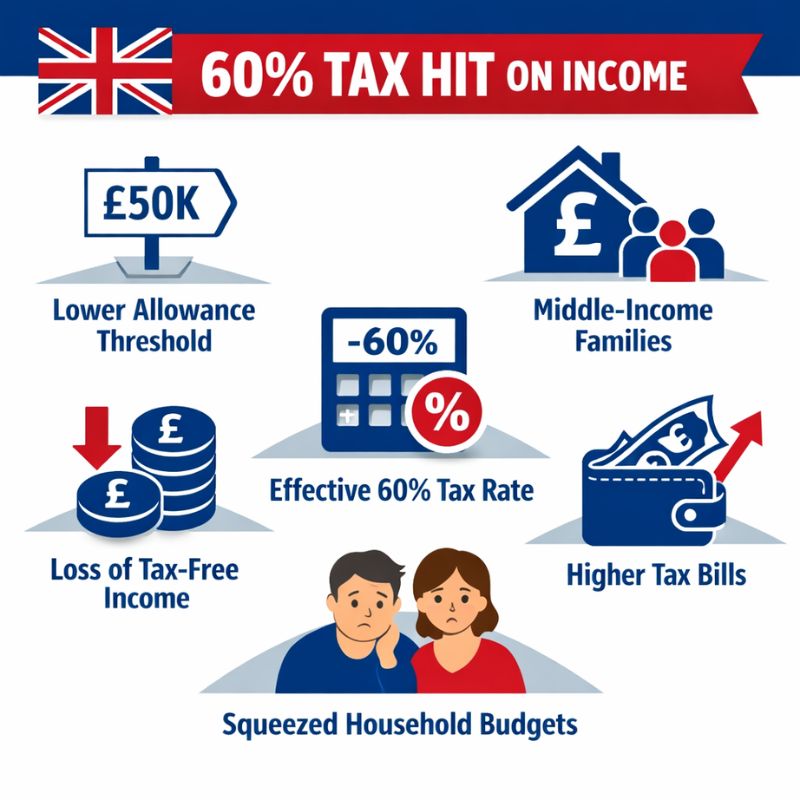
They start losing their Personal Allowance
Bit by bit. The result is that nearly 60% of that additional income goes to tax. Strategies to Reduce Your Tax Bill You still have options to lower your tax exposure before April 5 when the tax year ends.
Pension contributions offer one of the most effective solutions. When you put money into your pension it reduces your taxable income for the year. This can bring your total income back below the £100,000 threshold and help you avoid the steep tax rates. Here is how it works in practice.
Suppose you get a £1,000 bonus that takes your income to £101,000. If you contribute that £1,000 to your pension your taxable income drops back to £100,000. This keeps you below the danger zone and means you avoid the 60% effective tax rate. You also benefit from tax relief of up to 40% on pension contributions.
Final Thoughts
The 60% tax trap catches many higher earners by surprise because of how the Personal Allowance reduction works. Smart planning makes a real difference though. Using pension contributions as part of your tax strategy can significantly reduce what you owe while also building your retirement savings. Taking action before the tax year ends could save you a substantial amount of money.